
- Main page
- News
Energy Minister: The cities of the future will create more value with less energy
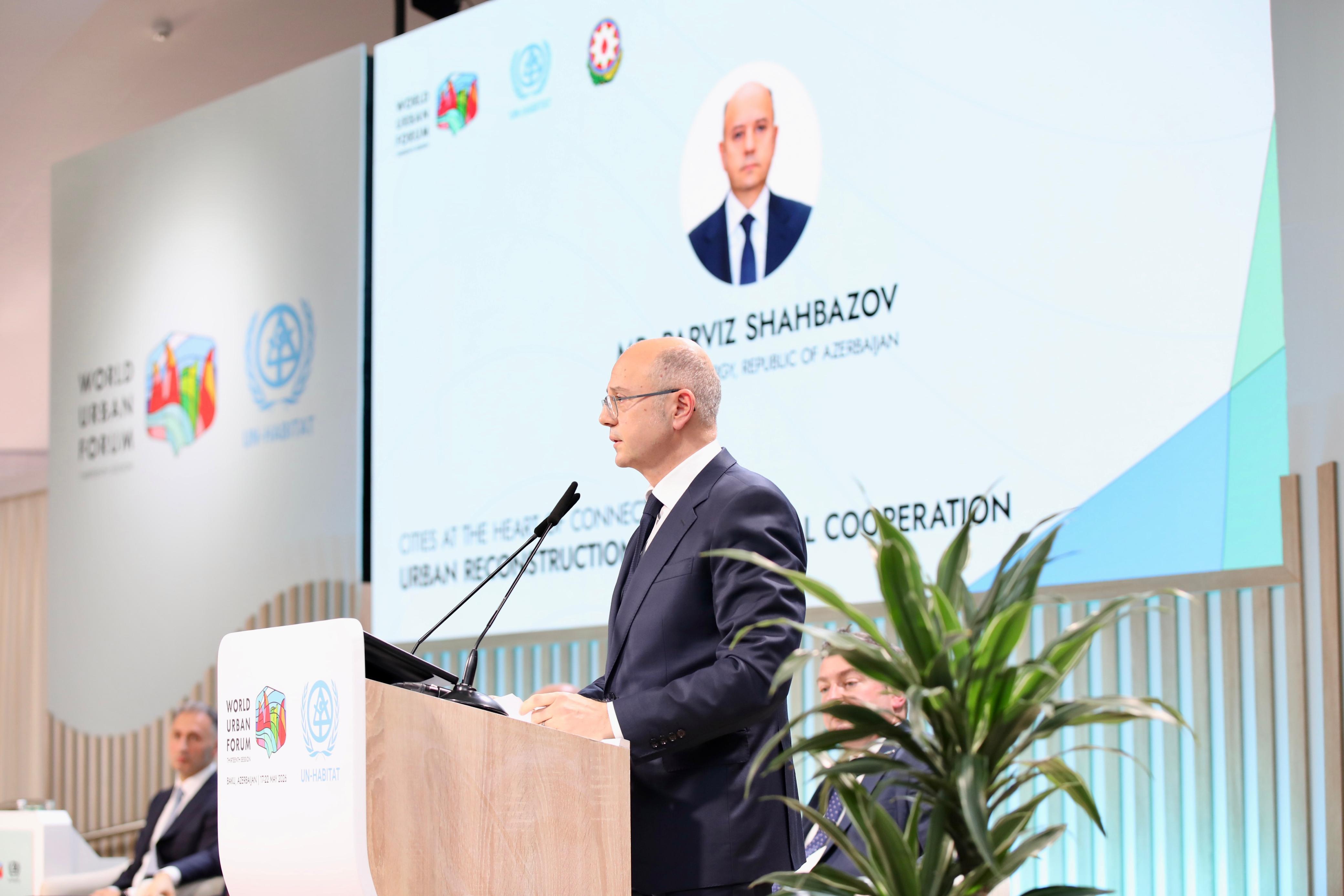
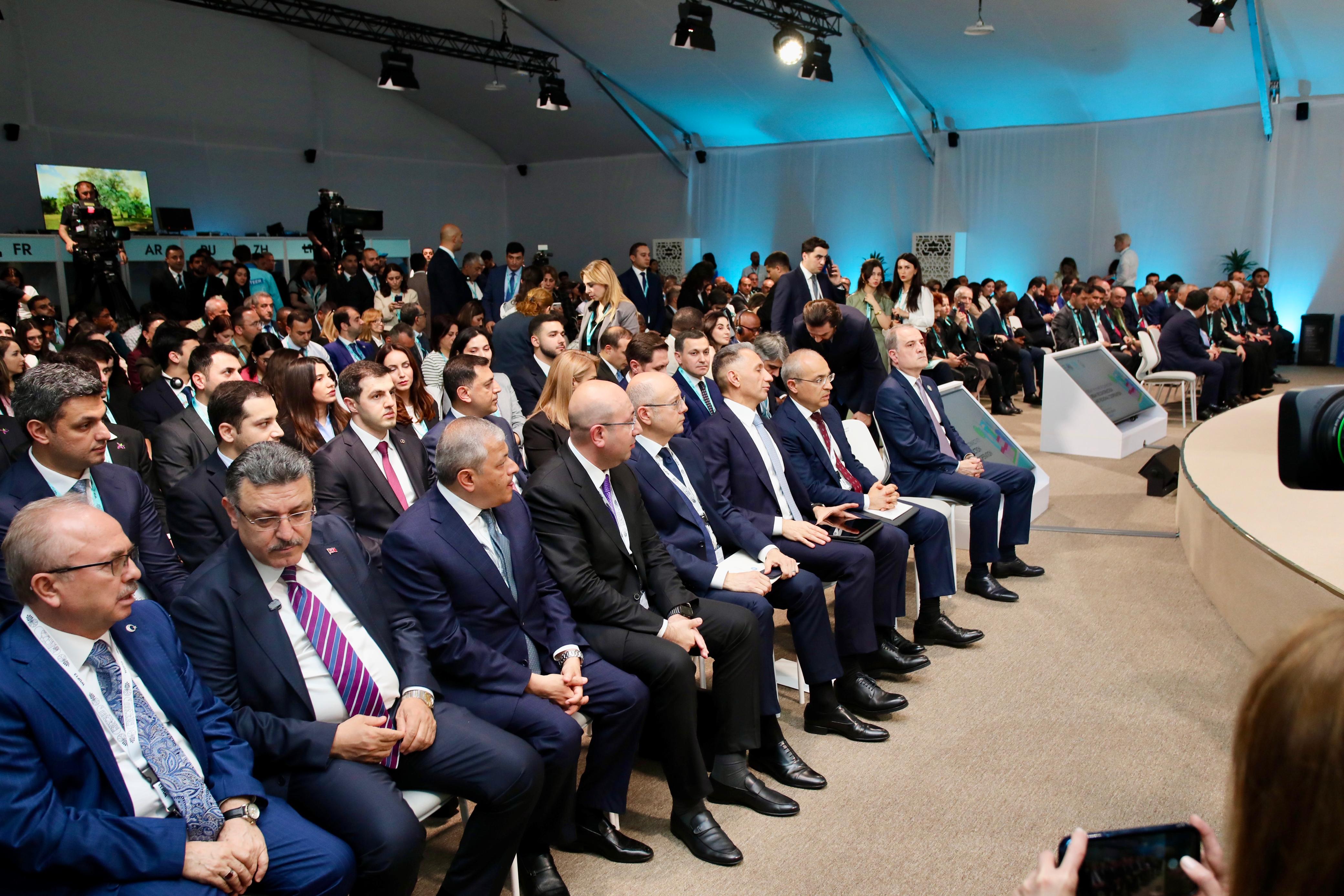
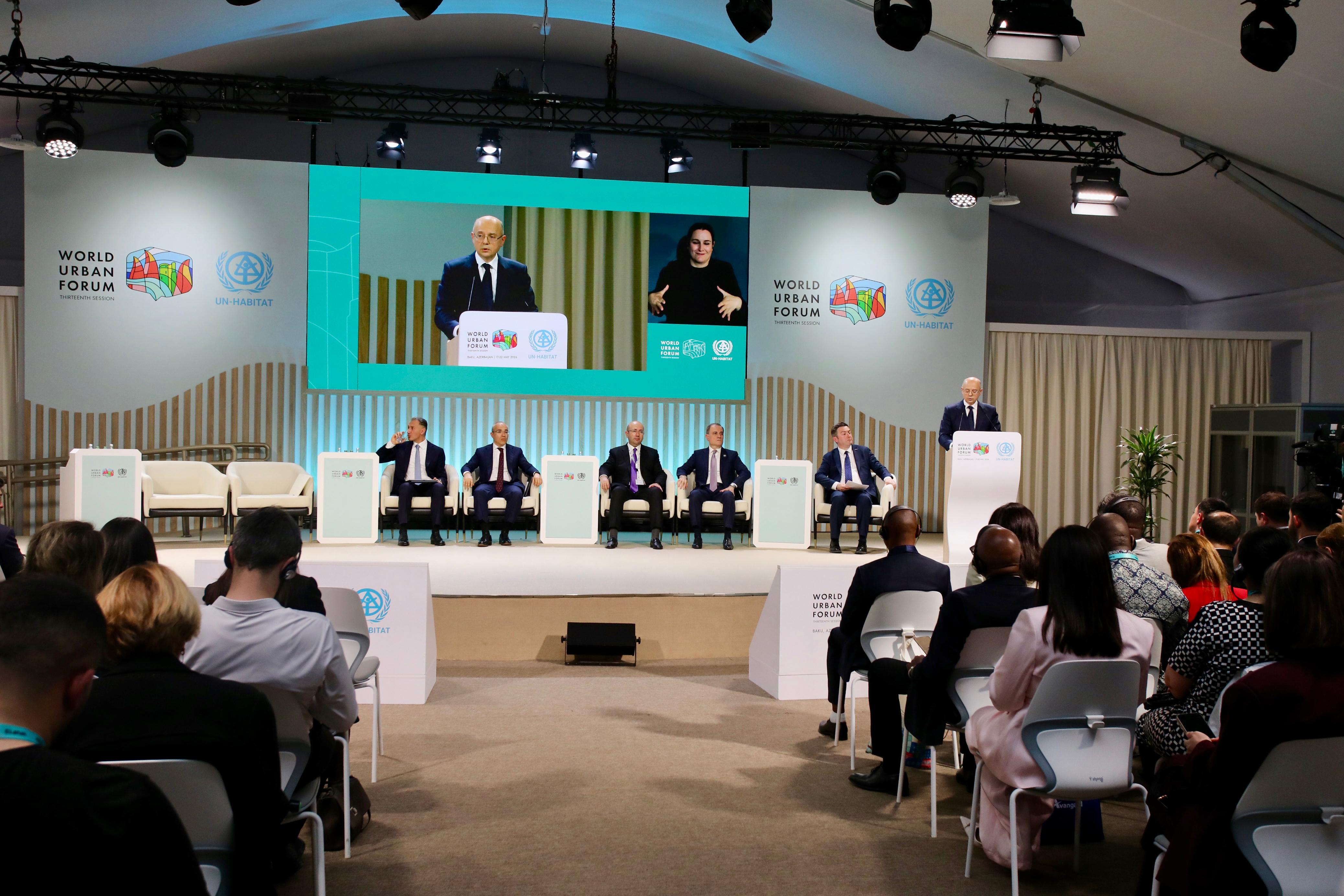
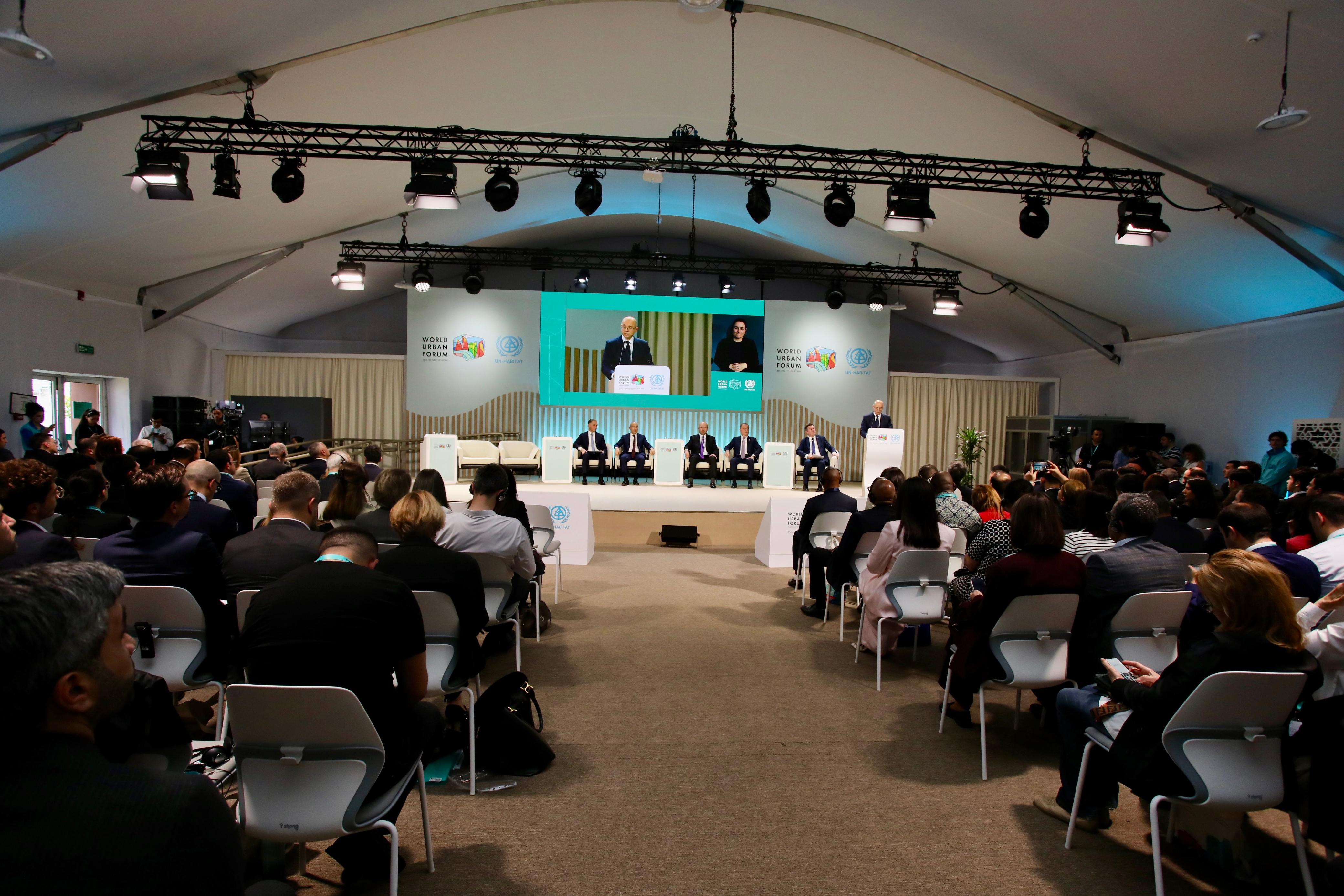
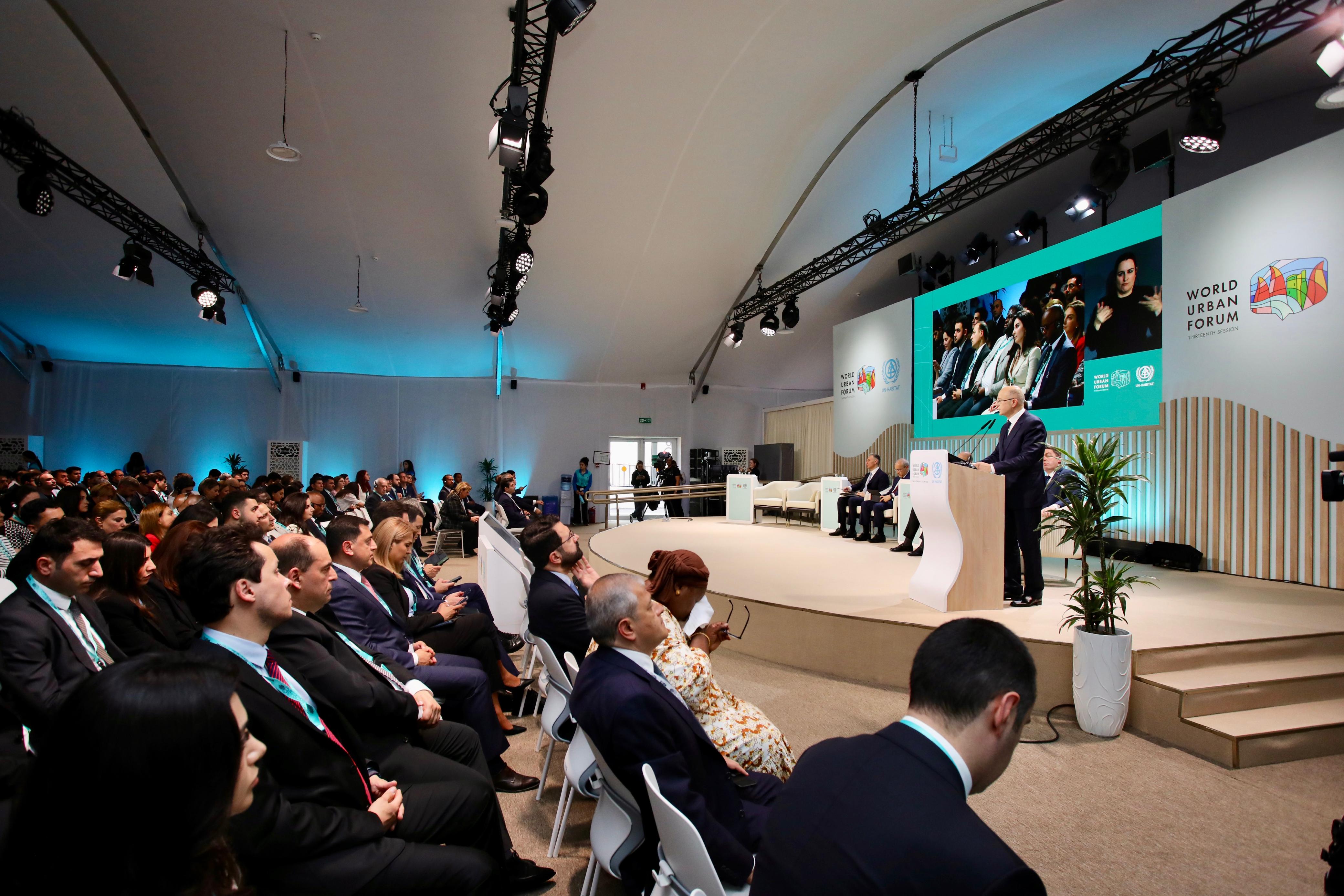
Energy Minister Parviz Shahbazov spoke at the special session titled Cities at the Heart of Connectivity: Urban Reconstruction and Regional Cooperation held within the framework of the 13th Session of the World Urban Forum (WUF13).
The Minister stated that Azerbaijan’s hosting of another major global platform after COP29 confirms that the country is not only an active contributor to the energy security agenda, but also a key participant in sustainable urbanization, the green transition and regional connectivity processes.
Energy Minister noted that the cities of the future will not be defined by the height of their buildings, but by their energy efficiency, technological development and regional connections. According to him, connectivity holds special strategic significance in the evolving geopolitical and geoeconomic landscape, and energy lines, transport corridors, fiber-optic cables, and electricity interconnectors are becoming the new “arteries” of the global system. In this context, Azerbaijan plays a strategic role in the formation of regional green energy and electricity interconnectors. "Azerbaijan is evolving into one of Eurasia’s main hubs of connectivity and cooperation under the visionary policy of President Ilham Aliyev, whose strategic approach brings together energy security, green development, regional integration and peace-building. The green energy corridors, which develop synchronously with the Middle Corridor, form a new energy architecture connecting the Caspian region with Europe and Asia.”
The Minister brought to the attention that in the near future, these integrated energy and connectivity networks will provide a closer connection of cities, industries and economies. It was also noted that projects aimed at developing approximately 8 GW of renewable energy capacity are under implementation in Azerbaijan, and around 2 GW of this capacity will be integrated into the national energy system by next year. This is not only an expansion of power generation - it represents a new industrial transformation, and an annual reduction of 2.4 million tons of emissions, green urbanization and diversification of energy balance.
The speech also highlighted the implementation of smart city and smart village models, energy-efficient infrastructure, and digital management systems within the Green Energy Zone concept in Garabagh and East Zangazur. It was noted that in these territories, 38 hydropower plants with a total capacity of 307 MW are currently in operation, solar power plants with a capacity of 340 MW are under construction, rooftop solar panels with a capacity of 7 MW have been installed, and assessment works are underway for the construction of a 240 MW wind power plant.
Furthermore, Azerbaijan has established institutional mechanisms in the field of energy efficiency, an Energy Efficiency Fund was established and this approach also contributes to reducing energy consumption and losses, ensuring the efficient management of resources, and promoting the development of smart infrastructure. "Azerbaijan aims to expand investment inflows and achieve more effective results. The cities of the future will create more value with less energy",- the Minister added.