
- Main page
- News
Baku Climate Action Week: Successful energy transition depends on building a clean, secure and sustainable energy system at an optimal pace
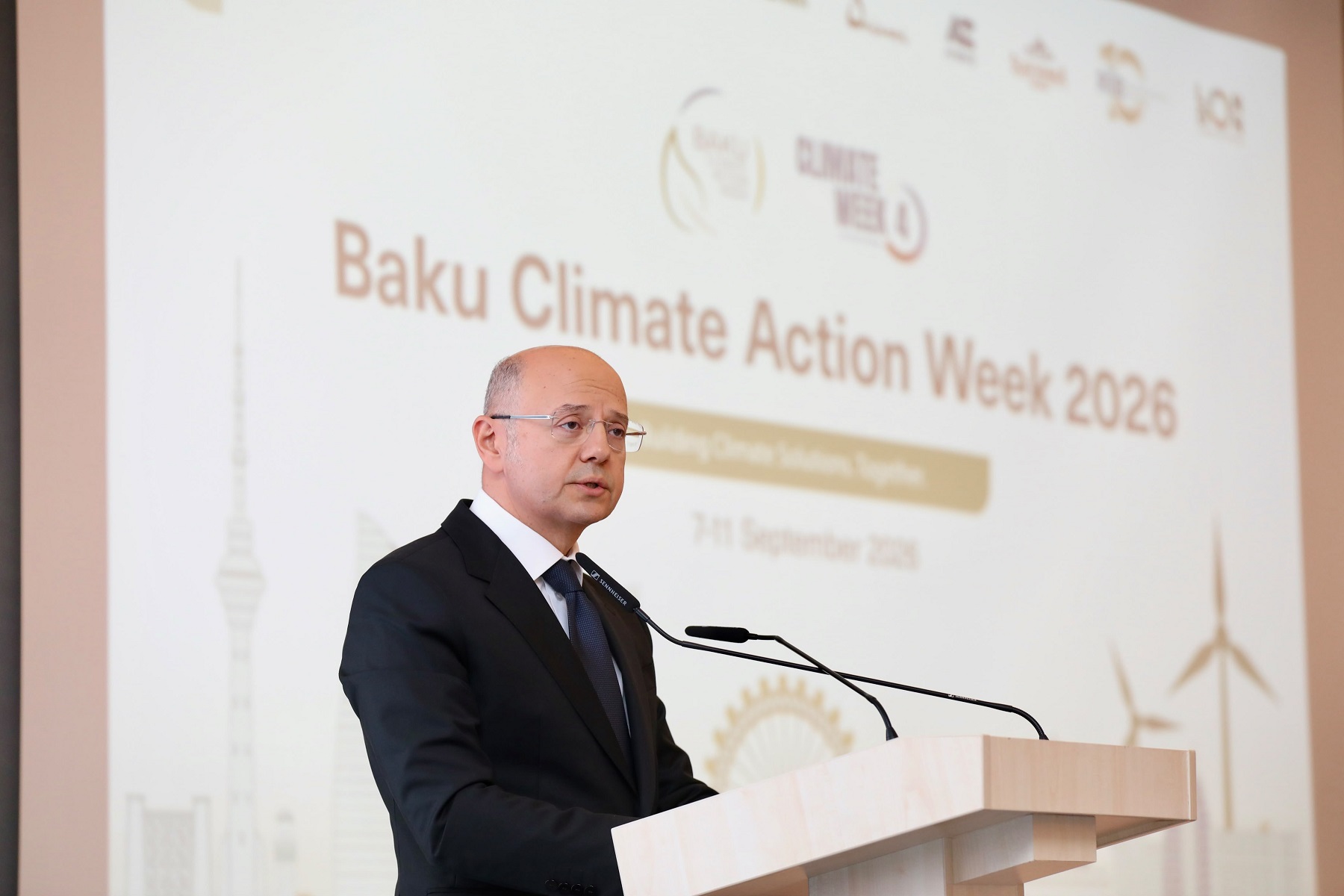
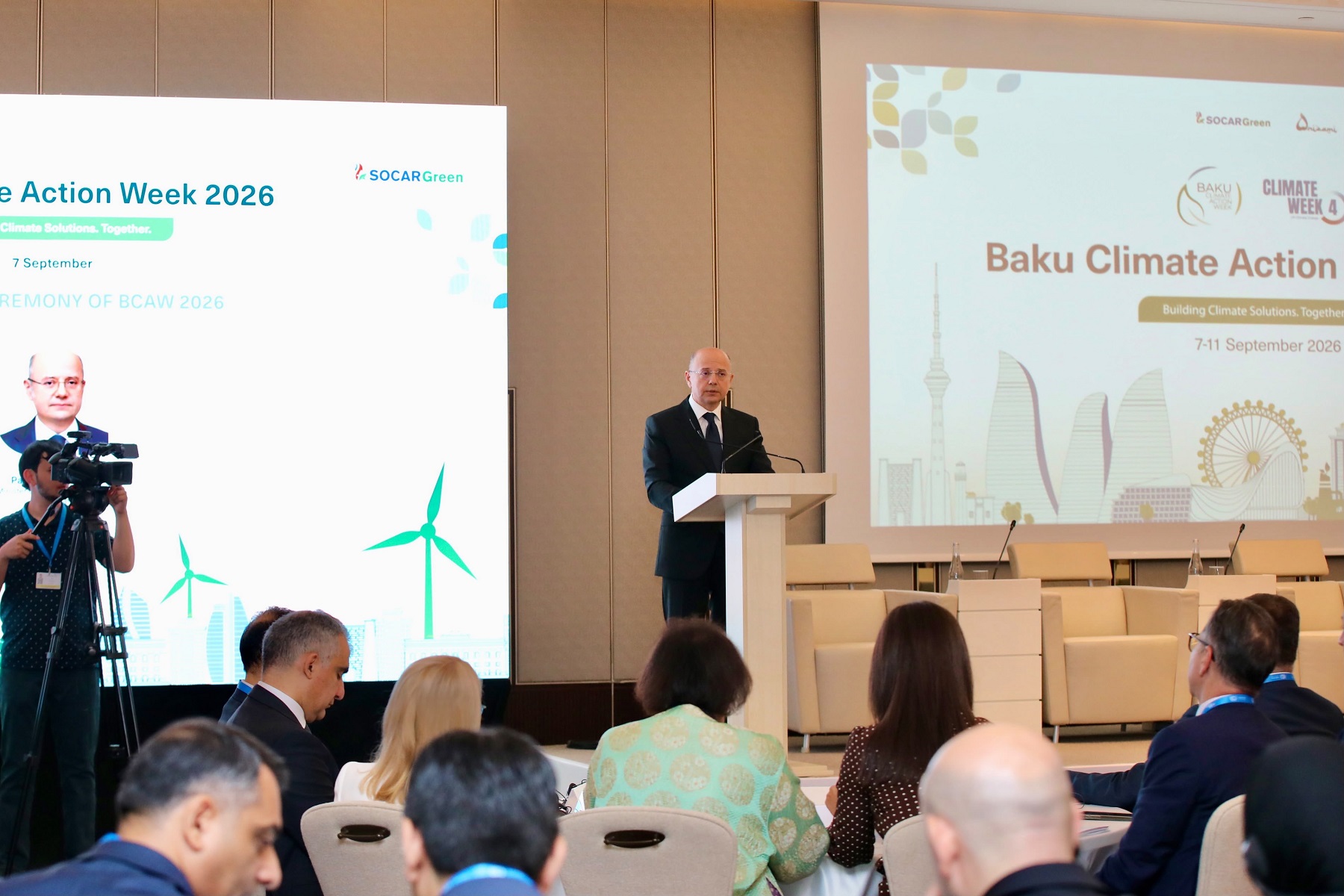
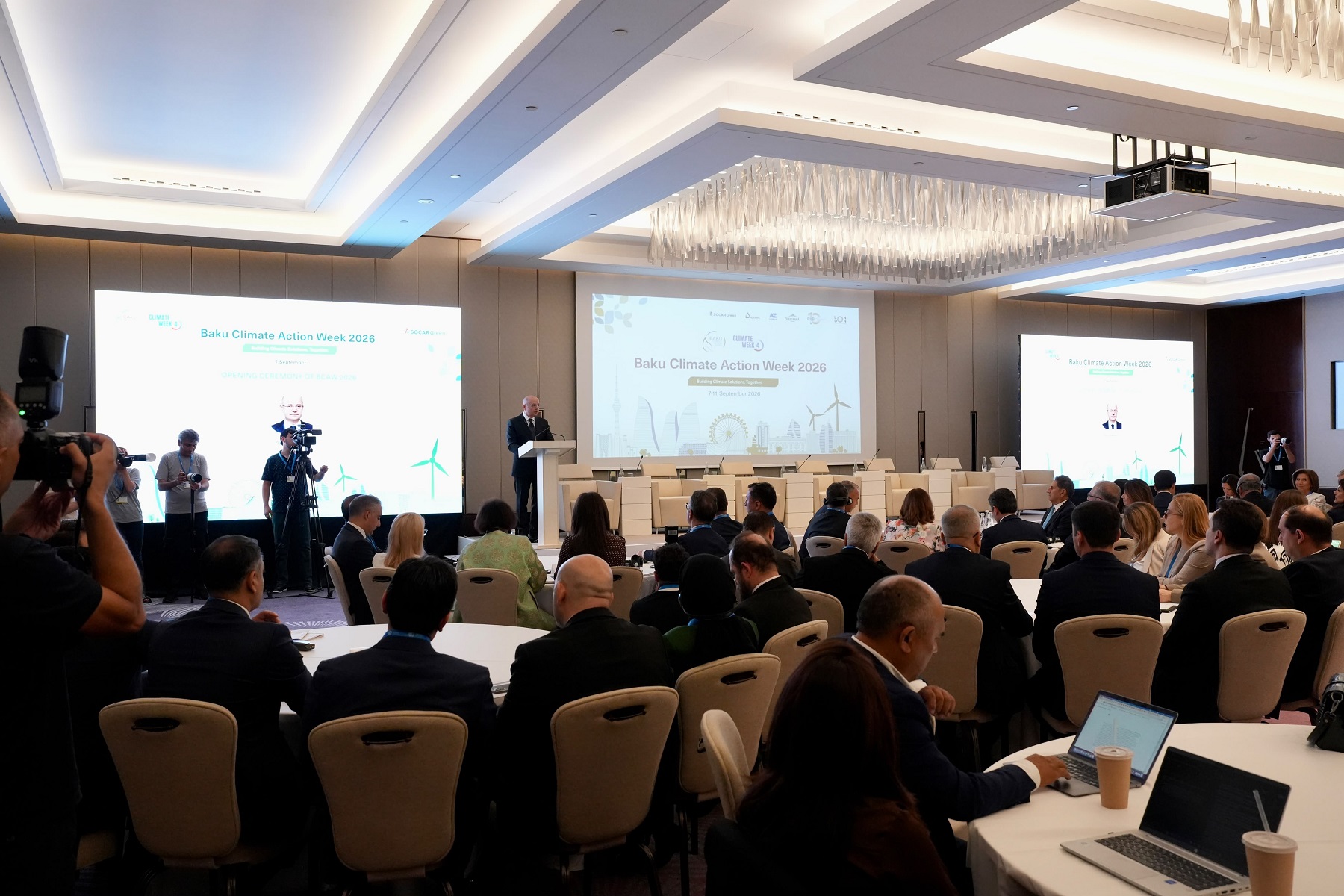
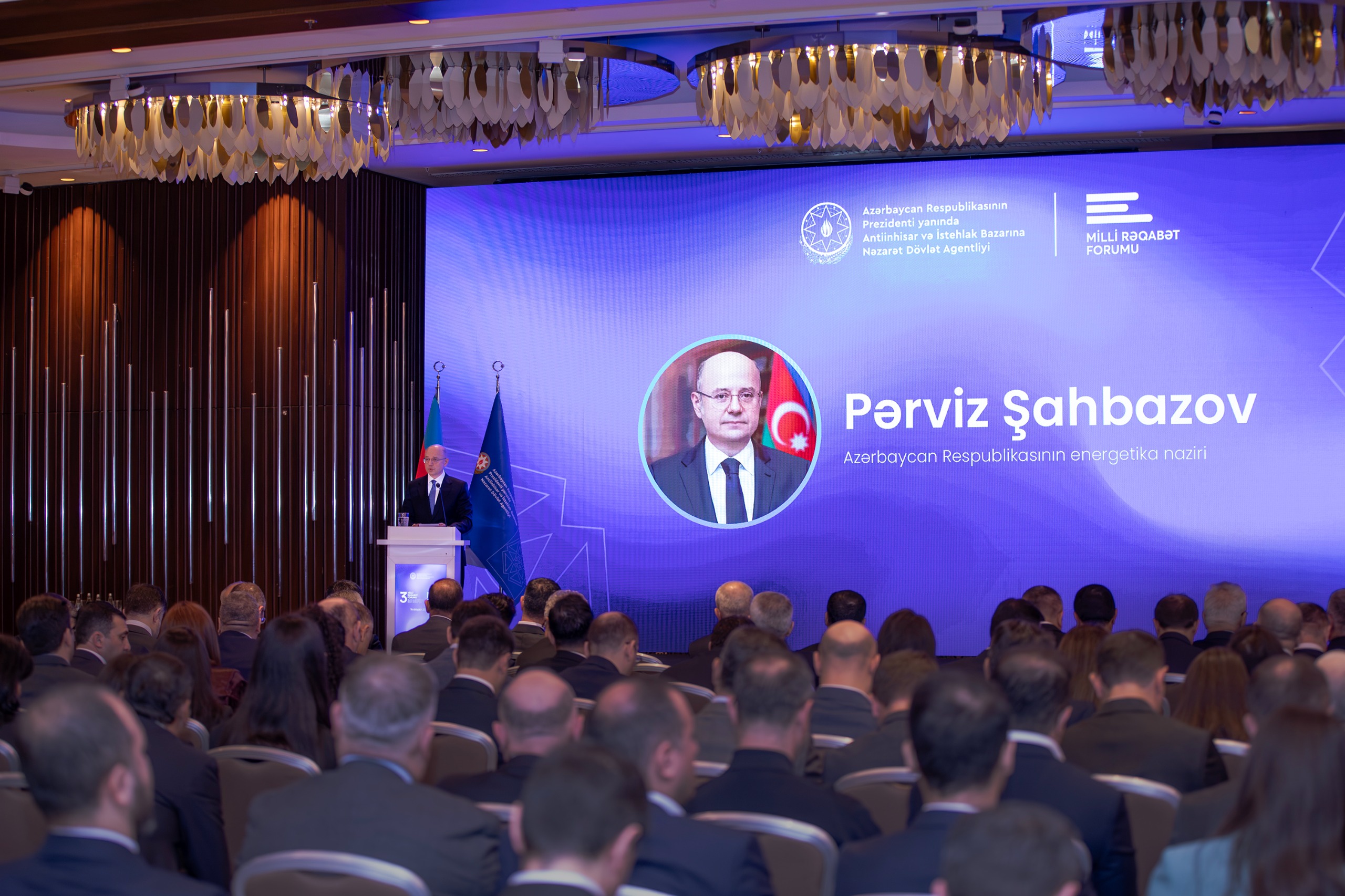
Minister of Energy Parviz Shahbazov delivered a speech at Baku Climate Action Week.
In his remarks, it was stated that COP29 established Baku as one of the key centres of global climate diplomacy, while Baku Climate Action Week serves as an important platform for sustaining this legacy.
Against the backdrop of energy crises, electrification, digitalisation, artificial intelligence and the rapid growth in demand driven by data centres, the importance of a balanced approach to the energy transition was emphasised. It was noted that a hasty move away from fossil fuels does not in itself guarantee a successful energy transition: “The key is to build, at an optimal pace, a clean, secure and sustainable energy system capable of addressing environmental challenges. This requires the parallel development of electricity grids, energy storage systems, energy efficiency and interconnectors alongside new generation capacity.”
It was emphasised that the energy initiatives put forward by Azerbaijan during its COP29 Presidency were also based on this approach. It was reported that 74 countries have joined the Global Energy Storage and Grids Pledge, 70 countries the Hydrogen Declaration, and 64 countries the Green Energy Pledge.
It was noted that in line with the strategic vision set by President of the Republic of Azerbaijan Ilham Aliyev, energy security and the green transition are being pursued in a coordinated manner in Azerbaijan. It was stated that, alongside the implementation of approximately 8 GW of solar and wind energy projects, electricity grids are being reinforced, energy storage systems are being deployed and new interconnectors are being developed. By the end of this year, wind power generation is expected to increase approximately sixfold, while solar power generation is expected to rise by more than 26%. By the end of next year, the integration of approximately 2 GW of solar and wind capacity into the grid will enable annual emissions reductions of 2.4 million tonnes.
It was highlighted that reconstruction, energy and climate policies in Garabagh and East Zangezur are being implemented through an integrated approach, while consistent steps are being taken towards implementing the Green Energy Zone concept in Nakhchivan.
Regarding the delivery of green energy to international markets, it was stated that the feasibility study for the Caspian-Black Sea-Europe Green Energy Corridor, with a total capacity of 3,900 MW, has confirmed the feasibility of the project. It was noted that the first phase of this corridor and the Central Asia-Azerbaijan green energy interconnection are expected to become operational from 2032. Work is also underway to establish new green energy corridors towards Türkiye and Europe via Georgia, the Zangezur Corridor and Nakhchivan.
Referring to COP31, to be hosted by brotherly Türkiye, the Minister stated that Azerbaijan will continue the legacy of COP29 and contribute to advancing the energy transition through concrete projects, regional interconnections and tangible emissions reductions.